Software, infrastructure and data engineered with intent for organisations that outgrow the templates they started with.
MOP AND BROOM CLEANING SERVICES LIMITED is an independent technology practice. We build custom software, modernise legacy platforms, operate cloud environments, and turn scattered operational data into systems that businesses can rely on for years, not quarters.

The name on our incorporation certificate is a reminder that businesses evolve. MOP AND BROOM CLEANING SERVICES LIMITED operates today as a specialist digital and technology firm, and the services on this site describe that practice as it exists now: software engineering, cloud architecture, cybersecurity, data platforms and applied artificial intelligence.
We work with founders, operators and internal technology leaders who need external engineering depth without losing control of their platform. Our engagements are shaped by the problem, not by a fixed catalogue, and the outputs we leave behind — code, infrastructure definitions, documentation, runbooks — are meant to be maintained by the client, not held hostage.
A generalist practice with specialist depth across the layers that make a modern digital product actually work.
- 01
Application engineering
Server-side services, browser interfaces, mobile clients and the shared contracts that hold them together.
- 02
Platform and infrastructure
Cloud environments, container orchestration, deployment pipelines and the observability that keeps them honest.
- 03
Data engineering
Ingestion, transformation and modelling of operational data into a form that can support decisions and downstream products.
- 04
Security and reliability
Threat modelling, access design, incident response and the operational habits that reduce risk over time.
A working index of the disciplines we deliver on active engagements.
- Custom software
- Bespoke systems designed for the specific workflow, not adapted from a shrink-wrapped product.
- Web applications
- Interactive interfaces built on modern browser stacks with disciplined attention to performance and accessibility.
- Mobile applications
- Native and cross-platform mobile experiences designed for reliable behaviour on real-world networks and devices.
- Cloud solutions
- Reference architectures on the major public clouds, provisioned as code and documented for handover.
- DevOps & delivery
- Pipelines, environments and release practices that keep small changes shipping predictably.
- Cybersecurity
- Security reviews, hardening programmes and the day-to-day practices that make attacks harder and detection faster.
- Data engineering
- Data pipelines, warehouses and models that turn raw operational events into a reliable analytical surface.
- Applied AI
- Practical uses of machine learning and generative models where they measurably improve a workflow.

Small teams, direct communication, no theatre.
We keep delivery groups small on purpose. A tight team with clear ownership produces better software than a large organisation reporting on itself, and it lets the people writing the code hear the operational context of the business first-hand.
Work is planned in short cycles, reviewed openly, and demonstrated in the environment where it will run. Estimates are treated as forecasts, not promises, and the trade-offs behind them are made explicit.
Environments that behave the same way on Tuesday morning as they do on Sunday night.
Infrastructure is defined in version-controlled code, promoted through the same pipeline as application software, and observed with metrics, logs and traces that can answer real operational questions.

Security is a property of the system, not a review at the end of it.
We approach security as an engineering concern from the first architecture conversation. Threat models are written down. Access is minimised. Secrets are managed, rotated and audited. Cryptographic decisions are made deliberately rather than inherited from tutorials.
Where regulatory context applies, our work is designed to be audit-friendly by default: decisions are recorded, changes are traceable, and the operational surface can answer the questions an assessor will actually ask.

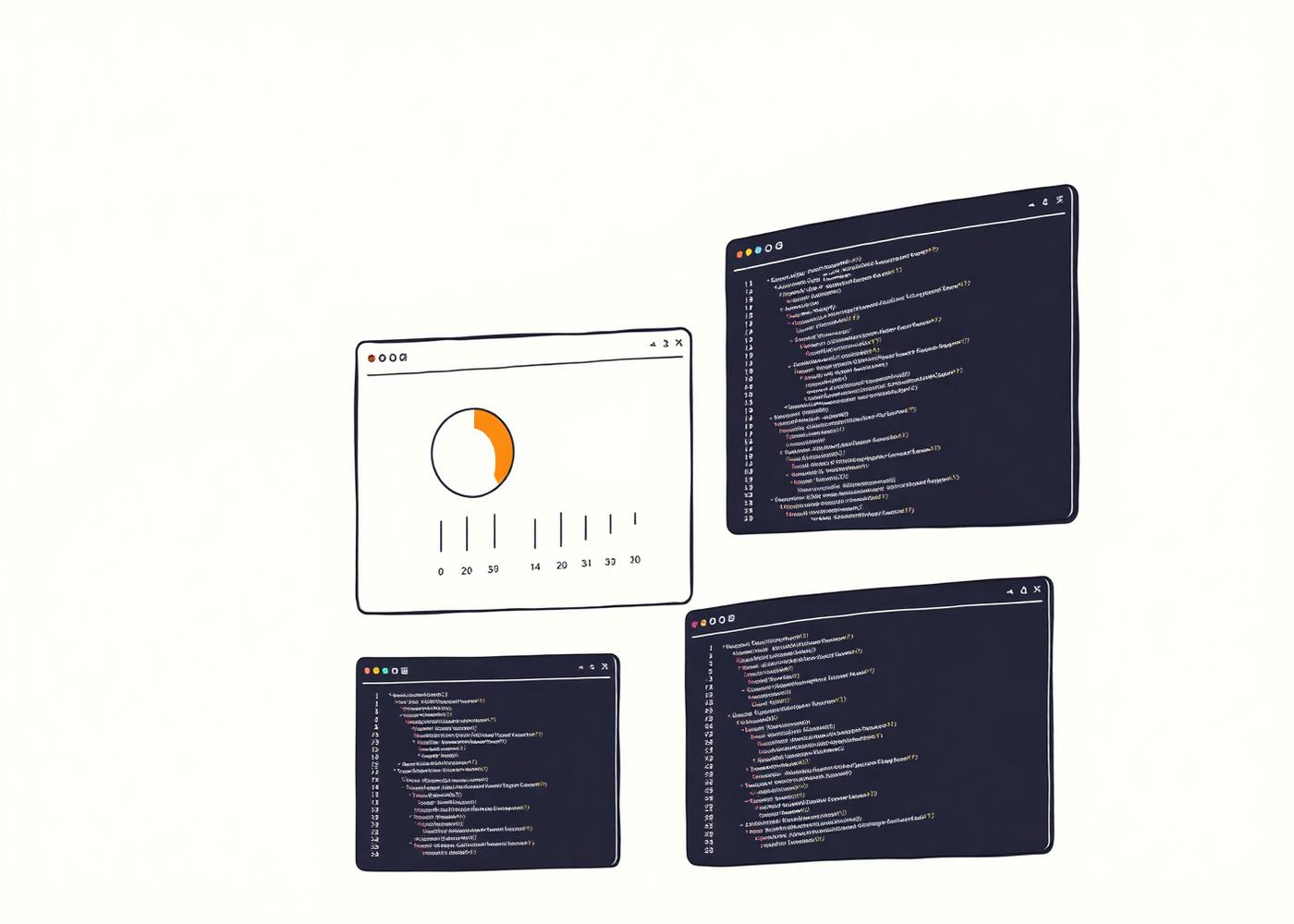
From operational events to decisions the business can defend.
Our data work covers the full path — capturing events at the source, moving them into a warehouse without losing meaning, modelling them into stable entities, and exposing the result through dashboards, APIs and downstream products. The goal is a data surface that survives contact with real questions.
Machine intelligence used where it genuinely reduces work, and left alone where it does not.
We integrate large language models, classical machine learning and workflow automation into existing systems where the outcome can be measured — turnaround time, error rate, cost per transaction, hours reclaimed.
Every AI component we ship is instrumented, evaluated against a baseline, and paired with a fallback path so the wider system keeps running when a model behaves unexpectedly.
We do not treat AI as a marketing category. It is one more tool in the engineering kit, deployed against problems it is actually suited for, and retired quietly when a simpler solution wins.
The sectors our engagements return to most often.
The list is deliberately narrow. These are the domains where our engineers have accumulated enough context to be useful from day one — where we recognise the vocabulary, the constraints, and the operational rhythms without needing an interpreter.
- 01Financial services & fintech
- 02Logistics & operations
- 03Health, wellness & clinical tools
- 04Media, publishing & digital products
- 05Retail, marketplaces & commerce
- 06Professional services & B2B SaaS
- 07Education & workforce technology
- 08Public interest & civic technology
A predictable sequence from first conversation to a system running in production.
- 01 / 04
Discovery
Structured review of the current state, the objective, and the constraints. Concludes with a written scope.
- 02 / 04
Architecture
Design of the system, the environments, the data model, and the security and operational boundaries.
- 03 / 04
Iteration
Short delivery cycles, visible progress, and continuous integration into the environment the software will live in.
- 04 / 04
Handover
Documentation, runbooks, training, and a defined support relationship for the phase that follows launch.
Quality assurance woven through the work, not bolted on at the edge.
Testing on our engagements is layered: unit tests inside the modules, contract tests between services, integration tests against real dependencies, and end-to-end checks against the deployed environment. Each layer exists to catch a specific class of failure, and we do not paper over gaps in one with theatre in another.
Beyond automated tests, we invest in the boring practices that quietly pay off — clear commit history, code review that engages with intent rather than syntax, and post-incident reviews focused on the system rather than the operator.
Four commitments that quietly shape every decision we make on a project.
- §Honesty over polish
- We would rather report an inconvenient status early than a smooth one late. Trust is compounded, not manufactured.
- §Longevity over novelty
- New tools are adopted when they make the work more durable, not because the industry has moved on to a new logo.
- §Ownership over hand-offs
- Whoever writes the code stays close to how it runs. There is no separate team we quietly throw the work over to.
- §Craft over volume
- We take on fewer engagements on purpose. The alternative is a portfolio we would not personally recommend.
Common questions from the first conversation, answered plainly.
- How does an engagement typically begin?
- Every engagement opens with a discovery phase in which our engineers review the current state of the system, the business objectives, and the constraints that shape the work. This gives both sides a common vocabulary before any code is written.
- Do you work as a standalone team or embedded with internal engineers?
- Both arrangements are common. We deliver full end-to-end programmes and we also integrate with existing product teams, contributing engineering, architecture and specialist capacity where it is needed.
- Which technologies do you work with?
- Our practice covers the mainstream server-side and client-side ecosystems used in modern web, mobile and data platforms, alongside the major public cloud providers and the tooling that supports secure, observable, reproducible delivery.
- How do you approach security and compliance?
- Security is treated as a design property of the system, not a review step. Threat modelling, least-privilege access, encrypted transport and storage, and audit-friendly logging are part of the default engineering standard on every project.
- Who owns the code and infrastructure you build?
- The client does. All source, infrastructure definitions and documentation live in repositories the client controls, and the handover pack is designed for another team to pick up without our involvement.
Written enquiries reach the practice directly. There is no gatekeeper and no queue.
The best introduction is a short note describing the problem, the current state of the system, and the outcome that would count as a success. We respond in kind.
A quiet, deliberate technology practice building software that outlasts the trend cycle. Independent by design, embedded when it helps, and accountable for what we ship.